
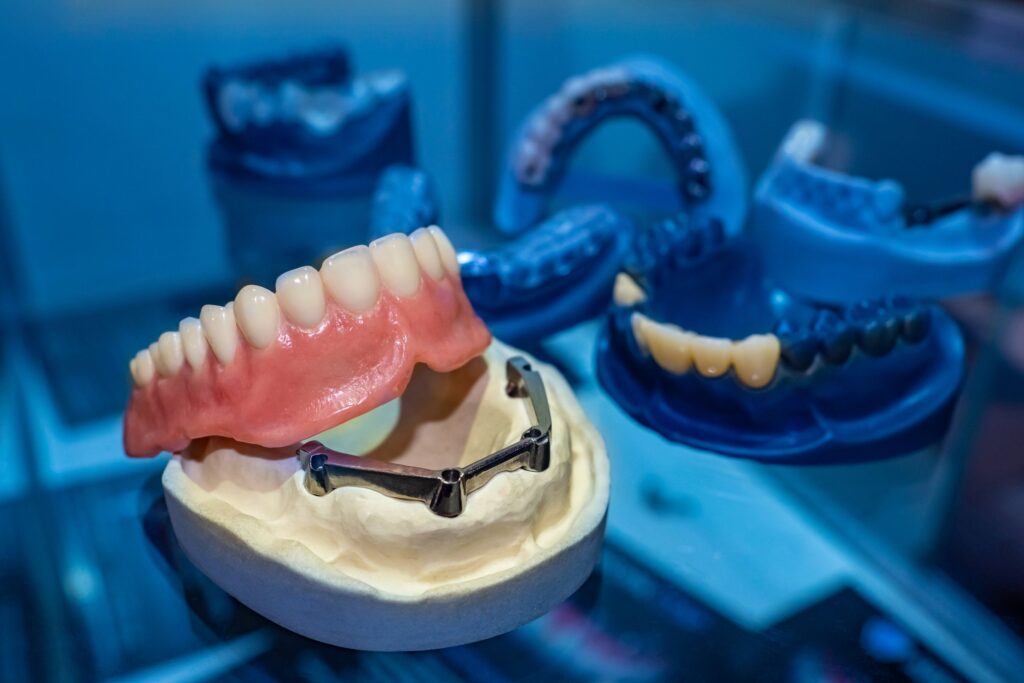
Did you know that your jaw starts to thin after one or more permanent teeth are lost? It begins to degenerate without as many roots to stimulate new bone growth each time you bite down. If you’ve rebuilt your smile with dentures, they can eventually become ill-fitting as the foundation of your mouth continues to degrade.
If you’re frustrated by a frequently destabilized or dislodged restoration, you might be a good candidate for implant dentures. Continue reading to learn more about some of the pros and cons of this long-lasting solution for tooth loss!
How Do Implant Dentures Work?
Traditional dentures are intended to be removable and remain in place throughout the day by forming a tight suction against your gum tissues. As your jaw thins, they become unable to form a tight enough bond, and might slip out of your mouth mid-meal or conversation.
Meanwhile, implant dentures involve surgically placing anywhere from two to eight dental implant posts directly into your jaw. It can take 3 to 6+ months to recover, as this is often how long it takes the mouth to generate enough new bone to completely fuse with these supports in a process called osseointegration. Once you’ve healed, your dentist can provide customized dentures that anchor to your implants, which can be removable or permanent.
What Are Some Advantages of Implant Dentures?
There are several excellent reasons to consider upgrading from traditional dentures to an implant-supported restoration, such as:
- Maintain your jawbone. Implants alone can help prevent the jawbone degeneration that typically accompanies tooth loss.
- Preserve a younger smile. Supporting your jaw also protects your facial structure to prevent additional wrinkles that can make you look older than you feel.
- Improve your diet. This option returns up to 80% or more of your original bite force so you can enjoy a wider variety of wholesome foods to support your oral and overall health.
- Enhance your enunciation. These teeth are firmly rooted and unlikely to slip out of place, making it easier to clearly pronounce different sounds and words to communicate with others.
- Longevity. These teeth can last 25+ years when properly cared for, making this an excellent long-term treatment.
Are There Drawbacks of Getting Implant Dentures?
Although many experts consider dental implants the ideal way to rebuild smiles, that doesn’t mean they’re right for everyone. There are also some disadvantages of getting implant dentures, including:
- Cost. This service may cost more than alternatives because it involves oral surgery and durable, biocompatible materials that must be paid for.
- Risk of failure. The procedure has a high success rate of over 90%, but your new teeth are not invincible and there’s a slight chance they could fail.
- Timing. It can take several months to complete this treatment due to the lengthier recovery period.
- Discomfort. It’s normal to feel sore and swollen for several days to a couple of weeks after your procedure, though it usually resolves itself over time.
If you’re considering switching to implant dentures but aren’t sure whether they’re right for you, you can learn more by scheduling an appointment with your dentist!
Meet the Author
Dr. Bryan Villescas takes pride in helping people improve their daily lives by enhancing their dental health. He earned his dental degree from the University of Colorado School of Dental Medicine, and today, is a member of several prestigious organizations, including the American Academy of Implant Dentistry. He offers a complete menu of services, such as implant placement and restoration, to meet your unique needs conveniently under one roof. If you need to replace missing teeth, you can request an appointment on the website or call (941) 627-9900.